You can’t defeat Hamas while it’s hiding in the crowd

Until Gaza’s civilians are physically separated from its fighters, every “victory” will just be the prelude to the next war.

It’s the same movie we’ve all seen before—Netanyahu in front of a camera, talking tough about taking control of Gaza to defeat Hamas, and then… the walk-back. Now the talk is about a methodical advance into Gaza City, telling civilians to leave before the IDF moves in.

Sounds reasonable on paper. In reality? Hamas knows this script better than anyone. They melt into the crowd of fleeing civilians, keep some fighters behind to ambush advancing troops, and live to fight another day. Israel racks up a few tactical wins, destroys a few more tunnels, and two years later we’re right back where we started.

And those tunnels—don’t think they’re gone. Even the rosiest military estimates say much of that underground web is still there, ready to be used again.

Here’s the core problem: Hamas isn’t going to change. The group’s endgame hasn’t shifted an inch, no matter how much destruction Israel deals out. As long as they can hide among civilians, they’ll rebuild, regroup, and retake control. That’s why the “win a battle, go home, call it a day” approach is just buying time.

But almost nobody—outside of Israel’s hard-right political fringe—wants Israel to rule Gaza outright. Netanyahu has said so himself. His preferred “day after” scenario is some kind of technocratic leadership, likely backed and bankrolled by Arab monarchies like Saudi Arabia, Jordan, and the UAE. The problem? You can’t hand over a functioning, peaceful Gaza to anyone if Hamas is still embedded in the population.

So what’s the missing piece? Physical separation. Pull the civilians out of the combat zone entirely. Not shuffle them from one part of Gaza to another. Move them out, full stop. Only then can the IDF clear the territory properly—no civilians in the crossfire, no cover for Hamas fighters, no half-finished jobs.

It’s not a pretty idea, and it’s not simple. Nobody’s lining up to take in Gazan refugees. Egypt, for one, has no appetite for importing a population seen as sympathetic to Hamas—their own Muslim Brotherhood cousins. Other Arab states, while happy to denounce Israel from afar, aren’t opening refugee camps or building housing. Europe bashes Israel and makes grand gestures about recognizing an illusory Palestinian state to pacify its own restive Muslim populations — but it’s all words and no plan.

And let’s be honest—many Gazans themselves are wary of leaving. They’ve seen what happened in 1948, when Palestinians who fled ended up stranded in camps for generations. But here’s the thing: they don’t have the freedom to choose right now anyway. Hamas controls their movements, their speech, their lives.

That’s why commentator Haviv Gur’s “crazy” idea might be the most logical one on the table: create a secure refugee zone inside Israel itself. I know—it sounds backwards. But think about it. Israel could ensure the civilians are safe, fed, and cared for, while keeping them completely apart from Hamas. The IDF could then operate in Gaza without the nightmare of urban warfare among noncombatants. And the international chorus accusing Israel of “ethnic cleansing” would have a much harder case to make if the displaced civilians were literally inside Israel, under Israeli protection.

No solution here is clean. None of them are pretty. Dealing with a terrorist group that actively uses its own people as human shields is going to look ugly no matter what. But the one thing that’s absolutely certain is this: if Hamas and Gaza’s civilians aren’t physically separated, nothing changes. Every ceasefire will just be an intermission. Every rebuilding effort will just be a prelude to the next war.

It’s easy for outside observers to call for “restraint” or talk about “addressing root causes.” The reality is that the root cause in this case has an army, a tunnel network, and a death wish—for Israel and, tragically, for many of the people it claims to represent.

Separate Hamas from the civilians, or resign yourself to watching this same bloody cycle repeat. Over and over. Forever.
1 Comment

Filed under Foreign Policy, hamas, Middle East

Worry about the real men who really want to kill us

In the overheated arena of Middle East discourse, where passions flare and reason often falters, the rhetoric swirling around Israel reveals a stark divide. On one side, defenders of the Jewish state like me grapple with the complexities of a nation under siege, striving to uphold its right to exist while navigating the fog of war. On the other, detractors—animated by bias, ignorance, or something darker—seize every opportunity to vilify Israel. They obsess over civilian casualties in Gaza, wringing their hands with selective outrage while ignoring the extraordinary measures taken by the Israel Defense Forces (IDF) to minimize collateral damage in their fight against terrorists. Context, it seems, is their enemy. The comparative restraint of Israel’s military, facing threats no other nation would tolerate, goes unmentioned. So does the larger picture: a global Jihadist movement, fueled by an ideology that prizes domination over life itself, and its troubling defenders in the West.

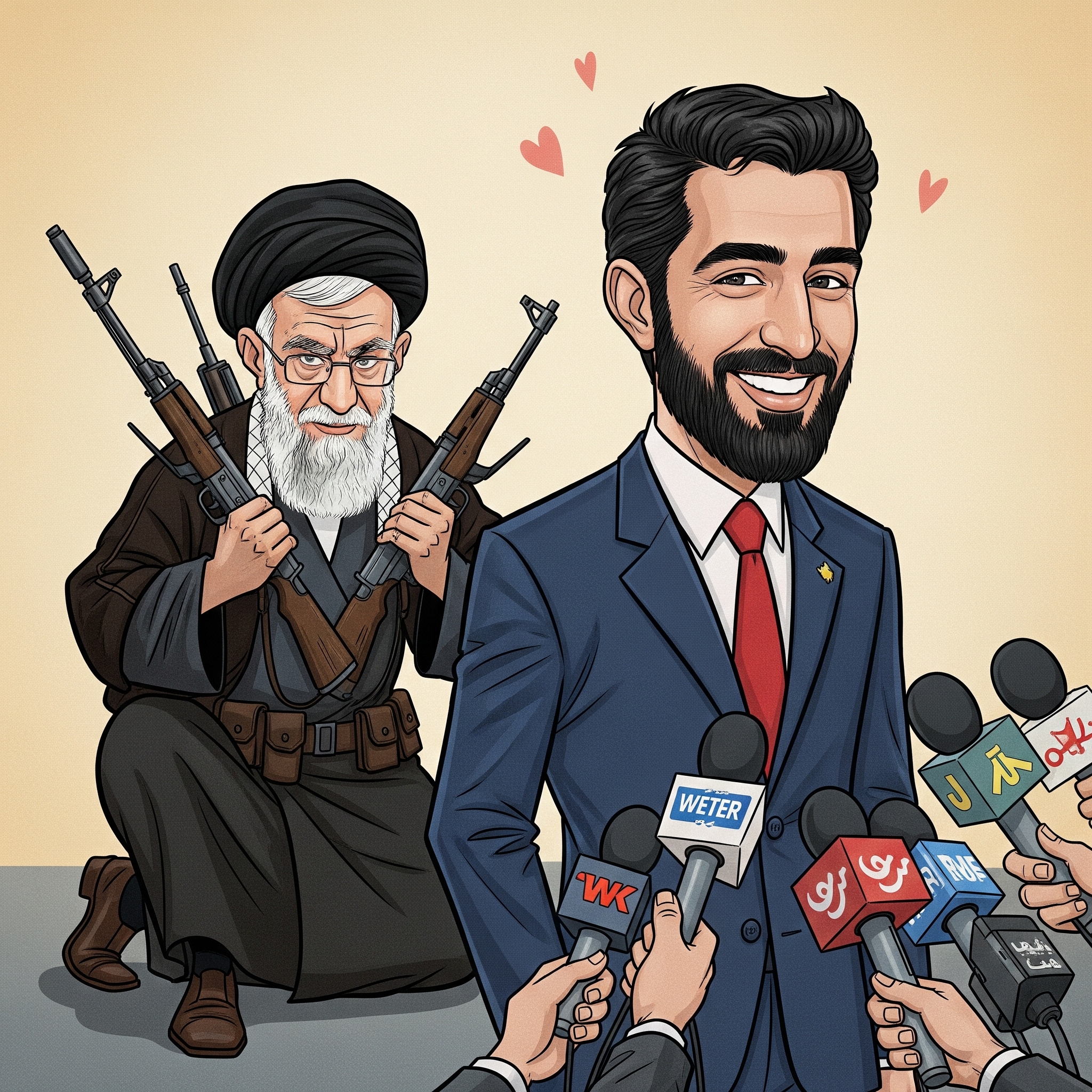
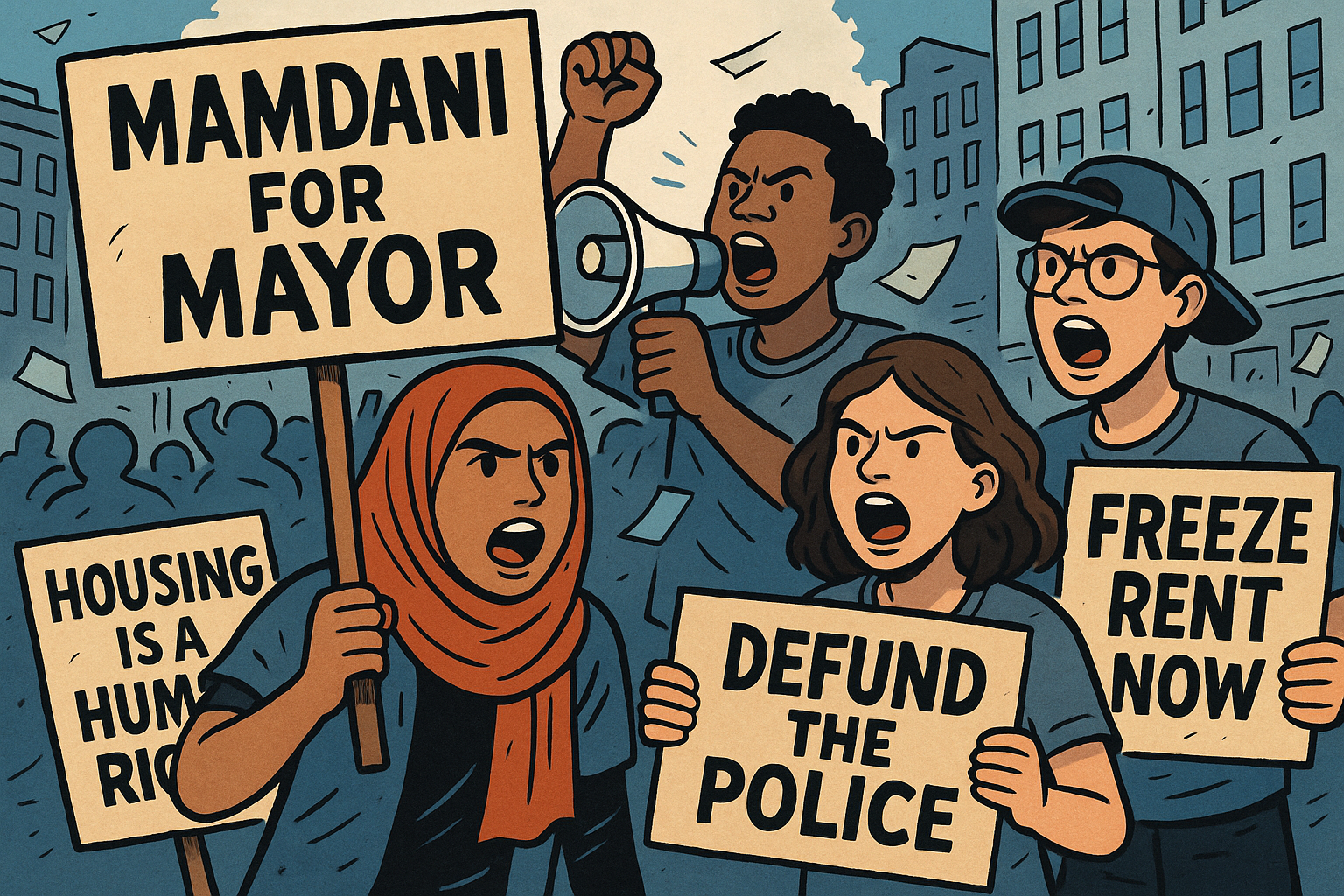
From this cauldron of distortion emerges Zohran Mamdani, the media-savvy leftist vying for New York’s mayoralty, whose anti-Zionist rhetoric has electrified the progressive fringe. Establishment Democrats, caught flat-footed, fumble to respond, fixating on decoding phrases like “Globalize the Intifada” or “From the River to the Sea.” They debate semantics as if words alone were the threat, sidestepping the harder task of confronting what Mamdani and his ilk truly stand for. Parsing slogans is a distraction. Leadership demands clarity about the intentions behind them—not just what is said, but what is meant.

Let’s dispense with the charade. The useful idiots chanting in Western streets, clueless about the Arab-Israeli conflict’s history or the geography of the Levant, are not the real danger. The Islamist political leaders in Turkey, the Gulf, and Iran, along with their fellow travelers in the West, know exactly what they’re saying. Their code is unmistakable: an anti-Western, barbaric ideology that exalts Islamist supremacy above all else—above liberty, truth, or human life. The Ayatollahs in Iran and their proxies, from Hamas to Hezbollah, are blunt about their aim: a world Judenrein, cleansed of Jews.

Their Western apologists, like Columbia University protest leader Mahmoud Khalil, are cagier. Pressed for specifics, they dodge. When CNN asked Khalil if he supports Hamas, he pivoted, proclaiming opposition to all civilian deaths. It’s a sleight of hand, equating the IDF’s painstaking efforts to spare non-combatants with the deliberate savagery of Iran-backed terrorists who embed themselves in schools, hospitals, and mosques, who disrupt aid to starve their own people, who target civilians as a matter of policy.

This moral blurring is no accident. It’s a tactic to obscure the truth: anti-Zionists like Mamdani and Khalil aren’t fighting for Palestinian rights or equality. Their aim is singular—to strip safety and rights from one group: Jews. They cloak their agenda in the language of justice, but their selective fury betrays them. Why else hijack the term “genocide,” a word seared into Jewish consciousness by the Nazi extermination machine? No other people in modern history have faced such a systematic program of annihilation. Yet, in the hands of these amoral moralizers, “genocide” becomes a weapon to libel Israel and the West while absolving the true heirs of Nazism: the Islamists of Gaza, Judea and Samaria, Lebanon, Iraq, Yemen, and Iran.

So while I cringe at the antisemitic rhetoric filling the news cycles and social media threads, it is the relentless commitment to violence that keeps me awake at night. Hamas and Islamic Jihad could end the war in Gaza tomorrow by laying down their arms and releasing their hostages. Instead, they choose to prolong suffering, sacrificing their own people to glorify a genocidal ideology. Their defenders in the West, whether through ignorance or malice, amplify this madness. They scream about Israel’s “disproportionate” response while ignoring the rockets raining on Tel Aviv, the tunnels built to slaughter, the captives languishing in Gaza’s depths. They demand ceasefires but never call for Hamas to surrender. Why? Because their goal isn’t peace—it’s Israel’s erasure – and by extension, our own.

1 Comment

Filed under Foreign Policy, Terrorism, Uncategorized

A generation’s search for purpose

The Democratic primary election for the mayor of New York has sent shockwaves through the political landscape. Zohran Mamdani, a 33-year-old with no relevant experience, secured the nomination on a platform calling for a socialist overhaul of the world’s financial capital — while expressing sympathies for Islamist terrorists in a city home to over 1 million Jewish residents.

Mamdani’s rise seems inexplicable, but it’s a symptom of a broader trend: a generation of young people, adrift in a sea of meaninglessness, latching onto leftist political fads that promise purpose but deliver little substance. For years, young urbanites have flocked to causes that feed their sense of self-righteousness, with little regard for historical context or policy coherence. These bumper-sticker crusades offer a seductive sense of moral superiority, filling a void left by declining religious affiliation and a broader erosion of purpose. In step charismatic figures like Mamdani, who peddle simplistic solutions to complex problems.

Take environmentalism, which has become a near-religious orthodoxy for many young people. They eagerly embrace campaigns championed by the church of climate change, disregarding evidence where green policies backfire.  Poor forest management, driven by senseless regulations, has fueled catastrophic wildfires and released massive carbon emissions.  Utility scale solar and wind projects, hailed as eco-friendly, have led to massive destruction of essential wildlife and habitats.  Bans on plastic bags push consumers toward heavier, more emission-intensive alternatives like paper or cotton.  These contradictions are brushed aside in favor of the warm glow of “doing something.”

The vilification of law enforcement follows a similar pattern. Movements to defund the police or dismantle immigration enforcement have gained traction among young activists, spurred by isolated or fabricated incidents of police misconduct, like the now-debunked narrative surrounding Michael Brown’s death in Ferguson, Missouri.  These campaigns paint law enforcement as inherently oppressive, ignoring the reality that police presence protects vulnerable communities. Data shows that reducing police resources correlates with spikes in violent crime, disproportionately harming minority neighborhoods.  Yet, the allure of “abolition” overrides these inconvenient truths.

Perhaps most troubling is the surge of antisemitism, cloaked as advocacy for Palestinian rights. Protestors chanting “Globalize the Intifada” glorify the Islamist supremacist ideologies driving violence against civilians, including the horrific attacks of October 7, 2023. They frame their activism through a lens of identity politics that absolves radical actors of responsibility, excusing atrocities as “resistance.” This moral relativism thrives in a climate where historical knowledge is shallow, and social media amplifies emotionally charged slogans over nuanced debate.

At the root of these trends lies a deeper malaise. Religious affiliation in the U.S. has plummeted, with only 47% of Americans belonging to a church, synagogue, or mosque in 2020, down from 70% in 1999. This decline has left a void of meaning, particularly among highly educated, urban young people. Into this vacuum flows a torrent of performative activism, fueled by social media’s dopamine-driven feedback loops. Platforms like X amplify viral causes, rewarding outrage and oversimplification over substance. Mamdani’s appeal lies not in a coherent policy vision but in his ability to tap into this milieu, offering gauzy promises—taxing the rich, freezing rents, ending incarceration—that resonate with a generation craving purpose.

These fads are not harmless. Policies born of feel-good ignorance, like defunding the police or banning fossil fuels without viable alternatives, have real-world consequences: rising crime, energy shortages, and economic stagnation. Mamdani’s platform, with its calls for radical redistribution and sympathy for illiberal ideologies, will destabilize a city already grappling with post-pandemic recovery. For his supporters, the appeal lies in the emotional rush of rebellion, not the messy reality of governance. The infatuation with leftist fads reflects a generation’s longing for something greater than themselves. Without the anchoring forces of faith, community, or critical thinking, young people are drawn to causes that offer moral clarity, no matter how detached from reality. Mamdani’s rise is a warning: when purpose is absent, simplistic ideologies and charismatic demagogues rush to fill the void. The challenge for this generation is to seek meaning not in fleeting trends but in a deeper engagement with the world—one grounded in reason, history, and a commitment to truth.

2 Comments

Filed under Uncategorized

A call for vigilance

The dust has barely settled from Operation Midnight Hammer, the audacious U.S. strike on Iran’s nuclear facilities at Fordow, Natanz, and Isfahan, and already the airwaves are thick with speculation and spin. Anti-Trump pundits and a cadre of biased reporters have seized on a leaked, low-confidence DIA analysis claiming the strikes merely delayed Iran’s nuclear ambitions by a few months. This narrative, gleefully amplified by those eager to undermine the operation’s success, misses the forest for the trees. The combined American-Israeli assaults likely obliterated key components of Iran’s nuclear infrastructure—burying fissile material and crippling advanced equipment. Yet, the real questions linger: Did Iran spirit away critical materials in the days before the strike, as reports of trucks fleeing Fordow suggest? And does the regime maintain secret facilities, hidden from the world’s prying eyes? For two decades, Iran’s playbook has been one of deception—obfuscating, denying, and only admitting the truth when cornered. We cannot afford to assume the threat is neutralized.

Even if we entertain the best-case scenario—that Operation Midnight Hammer dismantled every immediate nuclear threat—the reprieve is temporary. The Islamist regime in Tehran, driven by fanatical ideologues, is not swayed by the rational incentives that guide civilized nations. The mullahs’ obsession with a apocalyptic vision of Shiite domination overrides any concern for their own people’s suffering or the catastrophic consequences of their actions. When President Trump speaks of peace and economic prosperity in the region, his words fall on deaf ears in Tehran. These are not leaders who negotiate in good faith; they are zealots who justify oppression, terror, and reckless brinkmanship to achieve their twisted goals. A fanatic who wants you dead cannot be reasoned with, no matter the carrots or sticks you wave.

This grim reality demands a singular response: unrelenting vigilance. U.S. and Israeli intelligence must operate with razor-sharp precision, monitoring every move Iran and its proxies—Hamas, Hezbollah, the Houthis, and Iraqi militias—make. International oversight, often hampered by bureaucracy and political cowardice, cannot be trusted to keep Iran’s ambitions in check. Every step toward rebuilding their nuclear or ballistic missile programs must be met with swift, decisive countermeasures. “Maximum pressure” isn’t just a catchphrase; it’s a necessity—economically, diplomatically, and, when required, militarily. The Ayatollah and his proxies must face immediate consequences for any attack, threatened or actual, on American or Israeli interests. Whether it’s a rocket from Gaza, a drone from Yemen, or a cyberattack from Tehran, the response must be overwhelming and unambiguous.

The stakes could not be higher. Iran’s regime has made no secret of its hatred for the West, particularly the United States and Israel. Jews, Israelis, and the symbols of their communities—synagogues, cultural centers, even civilians—are prime targets for a regime that thrives on scapegoating and destruction. The proxies Iran funds and arms are not merely regional nuisances; they are extensions of Tehran’s malevolent reach, designed to destabilize and terrorize. Hezbollah’s arsenal in Lebanon, Hamas’s tunnels in Gaza, and Houthi attacks on Red Sea shipping lanes are all threads in the same web, spun by a regime that sees chaos as a path to power.

As dire as the situation is, one can envision a path to lasting security. The ultimate solution—dismantling Iran’s brutal Islamist regime—cannot be imposed from the outside. The ghosts of Afghanistan, Iraq, and Libya haunt us, reminding us that regime change orchestrated by foreign powers often breeds more instability than it resolves. The Iranian people, however, crushed under the weight of their oppressors, can and must find their own way to overthrow the mullahs and restore a government that values human dignity over ideological fanaticism. Only then can the West lower its guard and realize a future where Iran is a partner, not a pariah.

Until that day, we have no choice but to remain resolute. The risk of attack from Iran and its proxies is not a hypothetical—it is a clear and present danger to Western interests, to innocent civilians, and to the very ideals of freedom and coexistence. We must act with clarity, strength, and an unwavering commitment to defending our people and our values. The mullahs may dream of domination, but we will not let their nightmares become our reality.

Leave a comment

Filed under Uncategorized

Time to tackle the fires burning now

Our free society stands at a crossroads, besieged by real and present dangers that demand decisive action, not hand-wringing over hypotheticals or endless debates about future risks. Yesterday’s U.S. bombing of Iran’s nuclear facilities under President Donald Trump’s leadership is a prime example of confronting a clear and immediate threat head-on, rather than dithering over speculative consequences. Yet, predictably, the usual chorus of naysayers—Democrats, establishment elites, and globalist apologists—are clutching their pearls, fretting about oil markets, constitutional nuances, or Iran’s potential retaliation. This obsession with theoretical problems while ignoring fires burning now is a pattern we’ve seen before, and it’s time to call it out.

Let’s start with a familiar case: the environmental disaster in East Palestine, Ohio. When a train derailment unleashed toxic chemicals into a small American community, liberals were quick to pivot to their favorite talking point—climate change. They’d rather pontificate about carbon emissions in 2050 than address the immediate harm to real people breathing poisoned air today. Meanwhile, President Trump and Vice President JD Vance didn’t hesitate. They visited East Palestine, met with affected residents, and pushed for accountability, cleanup, and now attention to lingering health issues. That’s leadership—focusing on the tangible suffering of Americans now, not some abstract model of future doom.

The same misguided focus plagues economic discussions. Conventional thinkers hyperventilate about Trump’s tariffs-first strategy in trade negotiations with China, warning of inflation or market disruptions. They’re so busy crunching numbers on hypothetical economic models that they miss the real threat: China’s stranglehold on critical supply chains. From pharmaceuticals to rare earth minerals, Beijing holds leverage that could cripple our economy and security overnight. Trump’s approach—using tariffs to force China to the table and to stimulate domestic resilience —addresses this immediate vulnerability. It’s about protecting America’s sovereignty today, not fretting over what Wall Street’s spreadsheets predict for tomorrow.

Then there’s the border crisis. Democrats wring their hands over the fate of millions of illegal immigrants who flooded across our borders during the Biden administration’s lax enforcement. They cry about “humanitarian concerns” while ignoring the chaos unfolding in our cities. Rioters clog our streets, gang members infiltrate our communities, and unvetted terror suspects—potential sleeper cells—slip through unchecked. These are not hypotheticals; they’re happening now. Contrast this with Trump’s no-nonsense policies: a sealed border, ICE detentions of criminal aliens, and the “remain in Mexico” policy that help keep asylum seekers from overwhelming our system. These measures tackle the immediate dangers to our safety and sovereignty, not some utopian vision of open borders that ignores the consequences.

Now, we see the same pattern with the U.S. strikes on Iran’s nuclear facilities at Fordow, Natanz, and Isfahan. Yesterday Trump announced that B-2 stealth bombers and Navy submarines delivered a “spectacular military success,” obliterating key sites in Iran’s nuclear program. This wasn’t a reckless act but a calculated response to a clear and present danger. For over four decades, Iran has been at war with us—sponsoring terrorism, killing American servicemen, and maiming civilians with roadside bombs. Their nuclear program, despite Tehran’s claims of peaceful intent, has long been a ticking time bomb, with facilities like Fordow buried deep to evade attack and enriched uranium nearing weapons-grade levels.

Yet, what do Democrats do? They fret about oil prices spiking if Iran closes the Strait of Hormuz, or they nitpick over whether Trump sought enough congressional approval. They worry about Iran’s “right to self-defense” or the “everlasting consequences” of escalation, as if Iran hasn’t been escalating against us since 1979. Senate Minority Leader Chuck Schumer and House Minority Leader Hakeem Jeffries cry foul, claiming Trump misled the country or violated the War Powers Act. Meanwhile, Iran’s Foreign Minister Abbas Araghchi vows retaliation, conveniently ignoring that his regime has been attacking us through proxies for years. This hand-wringing over hypothetical fallout—oil shocks, diplomatic slights, or Iran’s next move—misses the point: Iran’s nuclear capability was a fire burning now, and Trump put it out.

The critics’ obsession with future risks ignores the reality of Iran’s actions. Over 450 missiles have been fired at Israel since the conflict intensified, and Iran’s proxies, like Hezbollah and the Houthis, have targeted U.S. interests repeatedly. Trump’s strikes, using 14 GBU-57 Massive Ordnance Penetrators and over 30 Tomahawk missiles, targeted the heart of Iran’s nuclear ambitions—facilities designed to produce weapons that could hold the world hostage. Satellite imagery shows craters and debris at Fordow and Natanz, confirming severe damage. Israel’s Prime Minister Benjamin Netanyahu hailed the strikes as historic, and even Israeli opposition leaders agreed they were necessary for global security.

The bottom line is this: leadership means tackling the fires burning now, not debating fire codes for a blaze that might never come. Iran’s nuclear program was a clear and present danger, not a hypothetical. Trump’s decision, backed by Vice President Vance, Secretary of State Marco Rubio, and Defense Secretary Pete Hegseth, prioritized America’s safety and that of our allies. As Vance said, the strikes were a “narrow and limited approach” to set back Iran’s nuclear ambitions by years, not a prelude to endless war.

The naysayers will keep wringing their hands, warning of oil shocks or Iranian reprisals. But what’s the alternative? Letting Iran, the world’s leading state sponsor of terror, inch closer to a nuclear bomb? That’s not leadership; it’s cowardice. Just as Trump and Vance addressed the East Palestine disaster, confronted China’s supply chain dominance, and secured our borders, they’ve now taken bold action against Iran’s nuclear threat. Our leaders must focus on the dangers staring us in the face—rioters, gang members, terror suspects, and rogue regimes—before they consume us. The time for action is now, not when the flames are at our doorstep.

4 Comments

Filed under Uncategorized

Why I’m glad I left California

The recent passing of Brian Wilson caused me to look back wistfully on my former infatuation with California.  To a 1980’s teenager in Georgia, California was the place of palm trees, sports cars, bikini-clad girls, and limitless possibilities.  In my mind, it was the California of a Beach Boys fantasy.

In 1999 I wound my way to the Golden State to chase the Internet boom and the promise of riches so many of my peers had fulfilled — some seemingly overnight.  For over 13 years in San Francisco and another 6 in Los Angeles, I hustled from one start-up company to the next.  I didn’t hit any jackpots, but I started a family and made a reasonably good living.

Another opportunity brought us to Arizona in 2017.  Here we made our home and launched a thriving new business.  For so many reasons, the California we left behind is no longer the one that inspires hopes and dreams.

Cost of Living

For one, consider the dysfunctional governance that has pushed a comfortable middle-class life out of reach for most people in California.  From housing, to gasoline, to utilities, to taxes, to childcare, to healthcare, to insurance – everything is more expensive for the average family in California than in the nation as a whole.  More than any other factor, this neglect of middle class cost-of-living concerns has caused people to follow my example and decamp for more affordable lives, especially in Arizona and Texas.

We’ve certainly been happy to pocket the savings that come with lower taxes, lower prices at the pump and grocery, and an affordable house with a yard.  But we were more than willing to pay a premium to live in California when it felt like it granted us a premium lifestyle.  Today not so much.

Quality of Life

Recent years have shown Californians are getting a lot less for their top-dollar cost of living.  Most visibly, homelessness is hitting record highs.  24% of the nation’s homeless now live in California, despite the state having only 12% of US population.  More than 2/3 of these people are unsheltered, overtaking public spaces and creating public health and safety hazards, which local governments refuse to reel in.  People using parks and sidewalks as bathrooms and drug bazaars have made neighborhoods intolerable for everyday residents.  No one wants to push a baby stroller past an addict shooting up or a mentally disturbed person shouting obscenities.

While you don’t want to fight for space with these people on BART or Los Angeles Metro, is it any better behind the closed doors of your private vehicle?  If you can dodge the encampments under freeway overpasses, good luck keeping your alignment in check.  California lays claim to some of the worst road quality in the nation, driving up costs and creating more painful commutes.  Not that these challenges are keeping drivers off the road.  Despite exorbitant public expenditures on maintenance and repair, roads in Southern California and the Bay Area remain gridlocked and performance of the state’s highways ranks 49th in the nation.  I certainly don’t miss the hours I spent idling my car’s engine on the 405.

All that said, people will put up with a lot to access great schools for their children.  Unfortunately, there’s not much of that to go around in California either.  California spends more than $18,000 per pupil each year, but has next to no progress to show for its investment.  While my kids at publicly funded schools in Arizona were back in class and mask-optional in the fall of 2020, California students remained in Zoom school and fell further behind.

Business Opportunity

Ok, but with such a big economy, isn’t California still a land of opportunity?   To be sure it boasts a large market, abundant natural resources, and great public and private universities that churn out a superior pool of talent. Yet California seems to be doing everything it can to shed its Golden State moniker.  The costs that weigh on consumers – real estate, taxes, utilities, insurance, etc. – likewise weigh heavily on businesses, especially smaller or early-stage companies.  Add to this overhead high labor costs due to an $18/hour minimum wage and mandatory sick and family leave benefits.  Even when these costs can be factored into a sustainable business model, the state kneecaps entrepreneurs with the most cumbersome regulatory burden in the nation, including over 420,000 regulatory restrictions.

This framework has become a playground for plaintiffs’ lawyers, who feed off the complexity and drive up defensive legal and compliance costs, draining resources and hamstringing productive investment.  The California addendum to our company’s employee handbook has more pages than the rest of the handbook combined.  Who in their right mind wants to build a business with that sword of Damocles hanging over the company?

Diversity and Tolerance

Many of my California friends would scoff at these critiques.  For them, the kitchen table challenges do not outweigh the core virtues of California as the beacon of progressive thinking and policy.  Only California brings together extraordinary geography with extraordinary demography.  In any California community, they say you can encounter a rainbow of cultures and ethnicities and a spirit of inclusion.

Perhaps on the surface this tolerance for differences rings true, but it comes with a huge caveat.  California tolerance only extends as far as your compliance with the prevailing leftist doctrine.  Question the urgency of global warming or the virtue of green mandates that are driving up the cost of living?  You are a climate denier.  Have your doubts about “gender-affirming” body-altering treatments for minors?  You are a transphobe.  Second guess the sanctuary city polies that undermine the rule of law and put officers at risk?  You are a xenophobe.  Support Israel’s self-defense against bloodthirsty jihadists?  You are a warmonger and an apologist for genocide.  For most of my 19 years in California, I kept my political opinions on the down low.  It just wasn’t worth the stress of speaking freely.

Life in State 48

Here in Arizona, I’m no longer a conservative outlier, but I’m also among friends and neighbors who see things differently.  Last fall my street sprouted as many Kamala signs as Trump banners, and that’s okay by me.  I’m more comfortable having an open conversation with Arizonans because we can all give and get respect for different points of view.  Of course, it helps when fewer of us are stressed out from a brutal commute or wondering how we’re going to secure affordable insurance.  It helps when we can choose to enroll our children in any public school, within or beyond our home districts.  It helps when we can count on the police and district attorneys to enforce the laws of our communities.  It helps when the Arizona Commerce Authority supports entrepreneurs with innovation grants, educational programs, and operational guidance.

Life in Arizona is more affordable, more flexible, more welcoming, and just plain easier.  We may be far from the ocean waves of a Beach Boys fantasy, but making our home in the desert has given us a second chance at the American dream.

6 Comments

Filed under Uncategorized

History is not a cartoon

grant

Confederate statues are under fire.  Cultural warriors are demanding their removal.  The more aggressive activists are taking matters into their own hands.  What’s feeding this frenzy?

Don’t get me wrong.  I am all for putting a leash on radical protesters vandalizing public property.  But if statues in the public square send the wrong message, haven’t these modern-day de-Stalinists got a point?

Bad Southern generals fought for slavery.  Noble Northern generals fought for freedom.  What could be more straightforward?   The right thing to do is honor the Union fighters and cast aside Confederate tributes – right?

Not so fast.  History is a bit more complicated than an episode of The Lone Ranger.  The guys in blue were no saints.  And the guys in gray weren’t so clearly the villains they’ve been made out to be.

Let’s start with General Ulysses S. Grant.  The leader of the Union forces is credited with saving our great nation.  Okay, but he also ordered the expulsion of Jews from territory conquered by the Union Army.  Grant’s “General Order #11” was a vile racist edict that could have served as a template for Nazi policy in Europe a century later.

Grant later became our 18th President.  His White House tenure is considered one of the most corrupt and ineffective in history.

Other Union leaders offered no greater portraits of public rectitude. In their literally scorched earth march through the South, General Sherman and his men intentionally terrorized civilians with actions clearly violating rules of war prevailing at the time.  These same military leaders then carried out brutal campaigns against Native American populations.

In contrast, the Confederate army was more constrained.  General Lee was a principled man, who insisted that civilian populations and property be spared wherever possible.  As evidenced by his writings, he also gave no quarter to Grant’s anti-Semitic sensibilities.

But Lee chose the wrong, losing side of the war.  For what was from his perspective an honorable decision, he is vilified.  Having graduated near the top of his class at West Point, he resigned his U.S. Army commission to stand with his native State of Virginia when it seceded from the Union.

Under today’s litmus test of identity politics, this transgression is irredeemable.  So Lee’s statues are coming down while Grant’s image still adorns our $50 bill.

When complicated men are reduced to caricatures, the debate is no longer about history.  Or even values.  Commemorations become a flag to be captured.  Politics decides what gets a place on the mantle.

Popular this year?  Get a statue.  Next year?  Only time will tell.

9 Comments

Filed under Domestic Policy, Identity Politics, Race Relations

Don’t like reality? Just make up a new one!

Read this post now on The Daily Caller!

http://dailycaller.com/2017/07/24/dont-like-reality-just-make-up-a-new-one/

******************************

.

When OJ Simpson was granted parole in Nevada last week, I was reminded that reality is a malleable construct in politics. Whether OJ really killed his wife and her companion in L.A. back in 1994 didn’t concern people fed up with a justice system sticking it to black America. Back then, protesters celebrated his acquittal. Many really believed he was innocent.

A result of strained race relations in Los Angeles? To be sure. An anomaly for the professional protester class? Hardly.

Consider the debunked cases of rape by the Duke lacrosse team in 2006 and then the University of Virginia Phi Kappa Psi fraternity in 2014. Proponents of the campus rape “epidemic” had no trouble presuming the guilt of the accused, marching in the streets and venting their rage across social media. It fit neatly into their narrative of white men abusing their privileged status.

Now the latest example of pre-fabricated protected class outrage comes courtesy of Islamist agitators and their apologists in the “international community”.

Last week the Israeli government, reacting to the July 14 murder of two police officers keeping the peace over the Temple Mount in Jerusalem, installed metal detectors to screen entrants to the holy site.

A reasonable measure to keep weapons out of a sensitive place of worship? Not according to a Palestinian leadership which incites, emboldens, and rewards acts of terror. On Sunday Palestinian Authority President Abbas reiterated his objections:

“We will not allow the electronic gates to continue [to be placed] there,” he told a convention in Ramallah. “Sovereignty is our full right, and we need to supervise Al-Aksa and stand guard at its gates.”

Violent protests have begun, and international condemnation is sure to follow.

To Abbas, the scandal is not that his constituents gunned down police officers in cold blood. It’s not that the Palestinian Authority continues to use U.S. tax dollars to compensate the families of jailed or slain Palestinian attackers. It’s not that Palestinian media and educational curricula proselytize Jew-hatred in every corner of Palestinian society.

No, the injustice of the magnometers is the challenge to Islamic supremacy. Seizing on an ordinary and customary security device, Arab and Muslim leaders have found another convenient hook to hang their anti-Israel propaganda. It makes no difference that such devices are used at the Vatican, during the Hajj in Mecca, and of course, for entrance to the Western Wall plaza below the Temple Mount. (I’ve been screened every time I’ve entered Judaism’s holiest site.)

Why can’t the Arab world be fair-minded and rational about the whole affair? If people can endure metal detectors at airports and shopping malls, why not at a holy site? I’m afraid it has little to do with sensible policy, and everything to with political power.

Rationalizations for violence, abdication of due process, and moral double-standards obscure a wholesale lack of self-criticism. It’s easier for the Arabs to blame Israel than it is to assess their own political and cultural shortcomings. Likewise, progressive activists blame law enforcement, firearms, the religious right, and “patriarchal society” for the ills of American society. Few acknowledge fault in the decline of marriage, lack of accountability in the welfare state, or the glorification of violence in popular culture.

Across the battle lines for taxpayer dollars, regulatory control, and levers of multilateral institutions, the means always seem to justify the ends, facts be damned. It’s always been about power, not truth.

3 Comments

Filed under Justice, Middle East, Terrorism

You’ve got to pick a side

index

Note:  Since I originally posted, this commentary has been published on The Daily Caller.  See http://dailycaller.com/2016/05/30/youve-got-to-pick-a-side/

*******

As I’ve told my son’s little league squad, you win as a team and you lose as a team.  If your pitcher is missing the strike zone, you don’t take your bat and ball and go home.  That will not get you to the championship.

And yet that is what a lot of conservatives are trying to do these days.

Donald Trump is now the Republican pitcher.  He is the GOP standard bearer.  Whether or not, in Paul Ryan’s words, he lives up to our standards.

It is true that Trump breaks with conservative orthodoxy on a number of issues. He embraces protectionism on trade. He refuses to address entitlement reform.  He does not say mean things about Planned Parenthood.

He also rejects traditional GOP foreign policy tenets even as he advocates for renewed strength abroad.  He disavows the war in Iraq and other neoconservative projects to implant Western democracy in places that have never known it.  He questions the relevance and viability of NATO.  He second-guesses strategic aid to countries that refuse to foot the bill.

Maybe some of Trump’s loose policy pronouncements are ill informed or shortsighted.  If so, and if he makes it to the White House, maybe he will change course.  It would not be the first time he has abandoned positions.  In fact, it is Trump’s lack of adherence to principle (not to mention a mixed history of supporting Democrats and their agenda) that has driven so many of the GOP establishment and pundit class to pledge allegiance to #NeverTrump.

Unwavering conservative principle girded the Ted Cruz campaign.  Consider where that got him.

Some of the fiercest rivals and critics of Donald Trump have been quickest to reverse course.  Last year they took turns deriding Trump as a “narcissist egomaniac” (Bobby Jindal), “like being shot” (Lindsay Graham), and as a “barking carnival act” and “cancer” (Rick Perry).  Now each has climbed aboard the Trump train.

For this, some members of the conservative punditocracy label them pathetic traitors.

What is their alternative plan?  William Kristol pines on about drafting a true conservative third party candidate.  Peter Wehner blithely promises to vote for someone else or abstain.

Mitt Romney and the Bush brothers literally commit to stay home, refusing to pay tribute to the presumptive nominee by attending the nominating convention in Cleveland.

This crowd needs to wise up.  Isn’t anything other than an embrace of Trump de facto a vote for Clinton?

Exactly.  And some implacable critics like Robert Kagan are openly planning to join the other team.

Seriously?  How can anyone who opposes the heavy-handed, growth-depressing, world-destabilizing policies of the Obama era do anything other than work to block a third Obama term with Clinton at the helm?

Many Republicans have personal animus for Clinton.  They detest the way she holds herself above the law and makes blatantly false statements to avoid accountability.  They resent the way her ruthless quest for power and wealth has trampled on helpless civilians, from the women her husband abused to the families of the Benghazi terror victims. They cringe at the sound of her voice.

But Clinton could be the most honest, gracious, and likeable public figure, and she would still usher in another span of liberal governance that undermines liberty, squelches growth, and damages American global interests.

At the end of the day, I think that conservative hold-outs simply cannot countenance the idea of a crass person like Donald Trump headlining the party of the conservatives.  He does not fit their ideals. He does not fit the model. They do not want to settle until they meet Mr. Right.

George Will counsels conservatives to fight Trump in the general election.  Then, after a single Clinton term, the voters will see the error of their ways and come around to a principled conservative that meets Will’s standards.

How bad do things need to get before Will and others recognize that change is needed now?

Trump wasn’t my first choice either. I got over it.  The benefits of a Trump presidency far outweigh the potential flaws.  On the critical issues of Supreme Court nominations, tax and regulatory policy, healthcare reform, and homeland security, Trump is squarely better for conservatives than Clinton could ever be.

Points where I strongly disagree with Trump – trade policy and entitlement reform come to mind – are tough pills to swallow.  But again, I can’t see a Clinton White House doing any better.

Electing Trump will undoubtedly ruffle feathers in the office of diplomatic protocol.  We will see behavior and comments that we would never expect from a commander-in-chief.

Well okay.  But like I said, Trump’s on the mound now.  And I want to go to the World Series.


11 Comments

Filed under Electoral Politics, Presidential Campaign

Let the people decide

taxi

In case you missed it this week, the New York Times reports that “an Uber driver admitted his involvement in a Saturday night shooting rampage” in Kalamazoo, Michigan.  NBC News likewise reports on the “eight people shot by a rampaging Uber driver”.

The press did get around to sharing other details about the deranged shooter Jason Dalton, including that he is a married father of two, was living in an ordinary neighborhood, and had no prior criminal record.

But I could not escape the media fascination with Dalton’s job, including follow-up pieces about rides given before and after the shootings and reactions from Uber officials.

Randomly perusing the links of the Gun Violence Archive, I could find no such examples of stories that led with the shooter’s chosen profession.  Instead the narratives mostly covered the incident itself, the police response, and the condition of victims.

The unstated implication is that Uber has a sinister side-effect.  Never mind that Uber has consistent real-time visibility into its drivers’ whereabouts.  Never mind that it can instantly deactivate the Uber app of any driver it suspects of wrong-doing.  Never mind that supposedly safe regular taxi drivers routinely fail Uber background checks.

I suspect Uber is suspect for something other than driver violence.  The ubiquitous ride-sharing service has become synonymous with the unregulated sharing economy.  And nothing threatens the liberal establishment more than a tool which bypasses the heavy hand of government.

For years passengers suffered from the regulated taxi monopoly.  During my pre-Uber decade in San Francisco, calling a cab was a roll of the dice.  When one did show up, the condition of the vehicle — not to mention the attitude of the driver — was shoddy at best.

Today, thanks to Uber and other ride-sharing services, I know where my ride is, when it will arrive, and who will be driving.  I can rate the driver’s performance.  After dozens of rides, I’ve rarely been disappointed.  What’s not to like?

Of course, it’s not a happy day for the taxi industry and the politicians it bankrolls at City Hall.   Desperate to preserve their turf, the incumbents are lashing out with unsubstantiated accusations that its more nimble rivals are unsafe.

There is no compelling evidence that riding in an Uber is any less safe than riding in a taxi.  And the people are voting with their apps.  Taxi rides and revenues are plummeting as consumers turn to more affordable and agreeable ride-sharing alternatives.

It’s all about consumer choice.  When you let the people decide, good things happen.  When you protect a special interest, there’s no free lunch.  Someone else is paying the price.

Productivity — which is another way of saying better products at a lower cost — cannot be compelled by government fiat.  The only reason poor value survives in an otherwise free market is restraint on more capable alternatives.

Consider the twin examples of our woeful Veterans Administration healthcare system and our generally dismal public education cabal.  Does anyone seriously doubt that these two dinosaurs would crumble if exposed to legitimate competition for patients and students, respectively?  Instead, protected by entrenched government employee unions, they continue to devour taxpayer resources without any accountability for their shortcomings.

Liberal politicians think that more aggressive taxes and regulations can unlock excessive gains of business to create a more equitable allocation of wealth.  But as every socialist experiment from Soviet Russia to modern-day Venezuela has shown, penalizing free enterprise destroys wealth, making everyone more equally poor.

Trial lawyers and labor union advocates want to rein in the sharing economy.  The only thing they’ll be preserving is one-size-fits-all lousy service.

1 Comment

Filed under Economic Policy, Government Regulation